
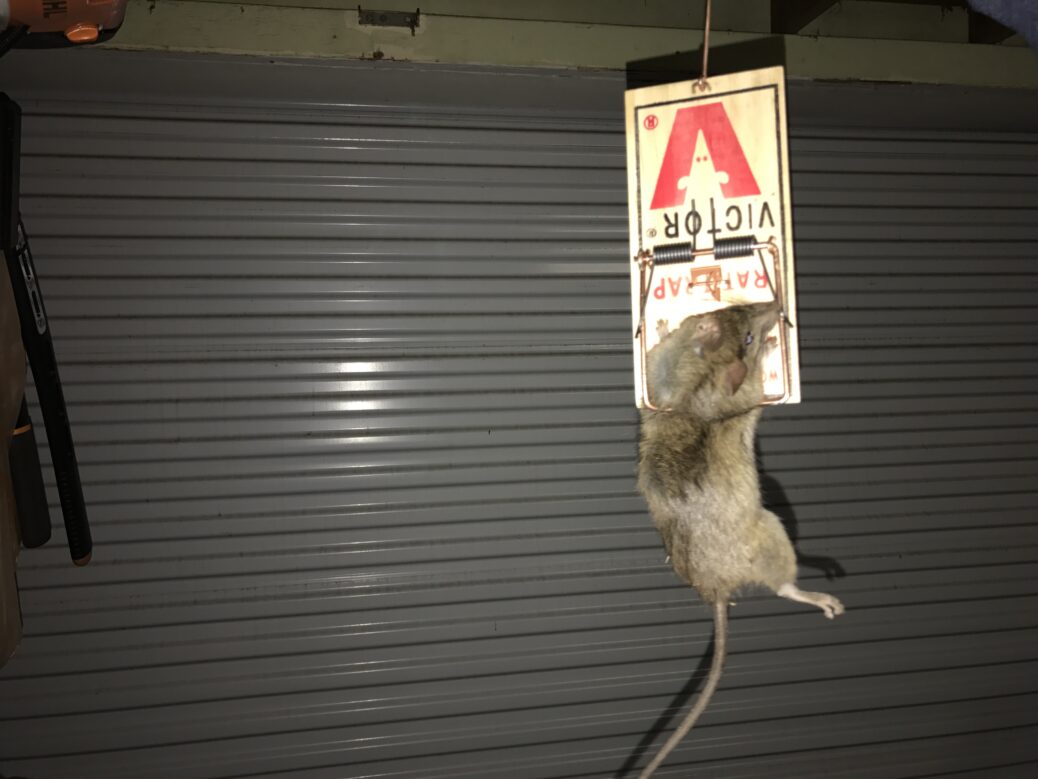

rat in trap condominium
Rats, rodents, and forest critters! They are all the same. They are fine in the forest or out in the wild, but are a nasty nuisance in a $750,000 condominium, or any residence. They are destructive, carry disease, and scare most people into panic when they invade a home. No residential condominium or home is immune to the prospect of a rodent invasion. Whether it is a 20 story high rise, town-home, or single story, rats are tenacious creatures. To anyone who has had a rodent die in a location where the carcass could not be found and removed, I don’t have to tell you how awful the odor is. It is misery having to live through the three or four days it takes for the decomposition of the carcass to complete, and the smell to go away. The best solution to rodents is to prevent them from getting in in the first place.
Preventive maintenance is the key. You must find out their points of access, and eliminate them. Common alleyways for rodents include air-conditioning, electrical, and other utility conduits, as well as soffit vents, broken screens, plumbing stacks, and light fixtures. If you have an infestation level population of rodents, they will leave signs. The easiest sign to recognize is rodent droppings. You will find small dark, about the size of a jelly bean, fecal matter on the ground or on the surfaces directly beneath these alleyways. You may also notice teeth marks, or signs of gnawing on wood and installation. If you suspect a hole, they will also leave brown dirt stains right at the point of entry, that helps confirm they go in and out frequently at that location.
rat trap condominium
Rats build nests just like other creatures, and rodents are not fussy about what they use to line them with. In fact, the dark colored air-conditioning pipe insulation is one of their favorites, along with roof and wall insulation, pine needles, grass, leaves, sticks, and other outside organics. If you suspect that you have rodents inside your building, one of the best methods of determining how they got in it is to just listen, when you have made the area quiet, turn off fans, etc. Since most rodents are nocturnal, that means they sleep during the day, and they come out at night to play and eat. They leave the home at dusk and return at dawn. You might have to stay up a couple of late nights and play detective to determine how they are getting in and where they are nesting.
Everybody either has a rat story to tell or they’ve heard of one. I have a couple I’d like to share. However, there is a code to rat storytelling. To say the least, rat stories are humbling and even humiliating. A safe place is assumed. By this I mean if you are willing to share these humbling experiences, no one will criticize or make fun. But the stories are so good, the code is necessary, it would be a shame not to be able to enjoy the stories together.
One day, as I was working on some paperwork in my study, I heard a blood curdling scream come from the laundry room. I jumped from my chair and ran toward the scream. As I entered the kitchen and saw my wife, hands on her head, in panic, fearful, and about at tears. As I was about to discover, she had just cause. She simply pointed to the laundry room, and couldn’t speak. As I approached the washing machine, I can see the lid was lifted. As I looked inside I saw a full load of wet and washed laundry ready to be loaded into the dryer. But what I never expected was to also see a dead rat lying among the clothes having been just washed with my favorite pair of jeans.
Apparently, the rat bait that I left out a couple nights before did its job. When rats eat bait, it is designed to make them thirsty. The idea is they will seek water, which is usually outside the building. In this case, the rat was seeking the moisture in the washing machine. They also love to drink the AC condensation moisture or water, and spa and pool water. My wife disinfected the washer. She washed that same load of laundry five times. And there is no truth to the rumor that when I wear my favorite pair of jeans I crave cheese.
At a beach-front condominium, recently there has been rodent sightings. It was a cold Florida day, and an air-conditioning service technician came in the office to get the key for the roof access door. He explained that he needed to service the air conditioner on the roof. He returned to explain that he found the problem to be that a rat had lodged himself in the electrical breaker panel of the unit. The rat was electrocuted by his body touching two terminals within the panel. Guess he was just trying to stay warm from the heat of the wires. He removed the dead carcass, clean the unit, and reset the breakers. The air-conditioning unit malfunctions normally.
Needless to say, the condo association has undertaken the task of eliminating the rodents from the property. There are no laws that I know of, that protect rats from being killed, regardless of the manner in which it is done. I hope I never hear of one.
There are a number of methods of securing your home or your condominium or your building so that rats cannot gain access. Plugging holes with steel wool is not the best way. Repairing holes permanently is the best method. For example, if your eve venting is broken, replace it. The most common product used is to plug conduits and holes that are not designed to be repaired is expandable spray foam. Most hardware stores carry these. Be mindful to purchase the type with minimal expansion. And this is also a good buy temporary fix. Rats do eventually eat through the foam.

cabbage palms
Some of the best nesting areas include attics, suspended ceilings, and palm trees. Palm trees offer an excellent home for these rodents for many reasons. Cabbage and date palms are the best homes. Their trunks are rough and easy to climb. The palm fronds offer pockets to live in, and date palms offer a food source. The fronds are easy to strip and use for nesting material. If you ever doubt that palm trees host rat populations in Florida, just watch a tree company trim a group of palms that has not been trimmed in a awhile or trimmed properly. The rats will flee in great numbers, and tree trimming companies are well aware of this issue and prepare for it. A poor trim job will invite rodent nesting. The “boots” are the ends of the fronds that are not trimmed tight. This occurs most often when a homeowner trims the fronds with a pole saw and doesn’t trim tight to the trunk, leaving frond ends or “boots”. Rats nest in the boots. Eliminating these and other probable nesting areas will help in getting the rats to move elsewhere to live.
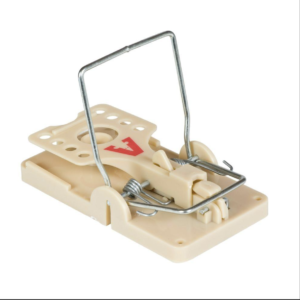
Also new are plastic snap traps. These are designed to be reusable, if you have the courage to remove the dead rat from the trap and sanitize it before you store it for later use. They cost approximately 5 dollars each. They are extremely easy to load and place. Most people wonder what the best bait is to use in snap traps. Cheese is NOT the best bait. The best bait is Peppermint Patties. Yes that’s right, that small chocolate treat that’s wrapped in foil that you and I eat after a meal to cleanse our palate. Rats have keen senses. Apparently they appreciate a great culinary experience, like Ratatoullie.
I have heard some funny stories from people who have tried glue boards. I don’t get glue boards.

rat glue board
The rat gets stuck, he drags the glue board with him wherever he goes. And when morning comes, and you’re faced with dealing with an angry rat, attached to this clumsy board, without your first cup of coffee, I don’t know. I would rather be greeted with a dead rat in a trap, have my coffee, read the paper, and then deal with throwing the rat in the trash. Glue boards are not any more humane, because you still have to deal with either killing the rat, or relocating him. Since I have no idea where it would be appropriate to relocate the rat, the rat must die. I would prefer the trap to do the killing as opposed to imagining myself with a hammer, a knife, or some other instrument having to send the critter to rat heaven.
One of the ways a rat can access a building is through a plumbing stack. It seems strange but it is true. The plumbing stack vents the air associated with the sewer lines coming from your toilet, sinks, showers, etc. The stacks runs to and through the roof. They are not covered. Plumbing stacks are an excellent water source for rats. A rat can climb down this vent pipe, and access the water in the “P Traps” under the sinks, toilet, shower drains, clothes washers, and any plumbing fixture required to have a P trap in its discharge line. The P Trap is simply a “U” shaped piece of pipe that is added to the discharge plumbing pipes. Water is trapped in the “U” part of the trap. This keeps the odors and gases in the sewer from coming back into the home. I admit, it is a bit discomforting, knowing that even if you don’t have rats in your house, each night rats are climbing down your plumbing stacks to get a drink of water under your toilet and sinks. When a home stays vacant for a long period of time, the water in the P Trap can evaporate and sewer gases can get into the home. A dry P Trap gives easy access to rodents to enter a vacant home. Believe it or not, a rat can swim through the water in a P Trap and getting to your home.
I was in a clubhouse rest room once. I lifted the toilet seat and there was a rat swimming around in the toilet water. I simply flushed the toilet and it flushed away the rat. But proving my theory, the only way that rat could have gotten there is for him to have come from the outside pipe, swam through the P trap, and into the toilet.
A great way to keep rats and rodents out of your plumbing stack pipes is to use hardware cloth, or some metal mesh material with a mesh of approximately 3/4 inch, over the stack and down the sides. Use an appropriate sized hose clamp to seal “the deal”. If rats have always accessed these pipes, and you build this barrier, they will try hard to remove it before having to find another water source. Make sure the mesh is not too large so that they can squeeze through the holes, and not to small or tight so that it traps the gases from venting properly. Rats and rodents come in all sizes, the younger ones will be skinnier and smaller. Remember, a rat is almost all fur. It is a skinny creature. If you have ever seen a wet rat, you know that their bodies are very slim by design. And finally, make sure the material used is a heavy enough gauge for them not to chew through it. They have large teeth and strong jaws, for good reason.
A couple of final thoughts. If you manage a multi-family building, and its vacant, make sure you run the water in the toilets now and then to keep water in the P traps beneath them. Otherwise you could wind up with rats running freely in and out of those toilets and in and out of the units.
toilet rat streaks
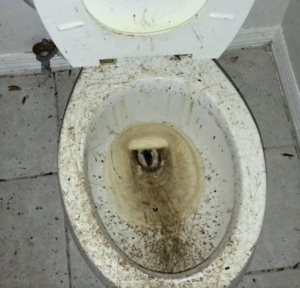
Here is a photo of a toilet where that was the case. The brown streaks you see here are from the feet of rats, scratching their way in and out. Yes it is gross.
Make sure that your air-conditioning unit is functioning properly. If the water discharge pipe is plugged this will cause water to accumulate in and under the air handler, in the overflow pan (if you have one), which would be a water source for a rat. Eliminate all food sources that might attract rats inside the home, and out. Remember to place all your garbage in plastic bags before you throw them down a trash chute, place them in the community dumpster, or put them in a trash can. A well-sealed bag blocks the odor. Rats love to forage in these trash receptacles. Being nocturnal, smell is their strongest sense. The less odor coming from these places, the less likely you are to attract them. These are also ideal places to leave out bait and traps. One word of caution, when leaving bait out, make sure you use an appropriate container to house the bait so that it cannot be accessed or eaten by small dogs, pets, or children. Pest control companies offer this service. So if you do not feel comfortable handling the baits or the traps, contact one and let them do the job properly.


